
For Seattle
A project to help Seattle follow through

Seattle approved plans to build hundreds of new homes near future light rail stations. The zoning was in place. Funding was lined up. Neighborhoods supported the projects. But some have spent over a year stalled in permitting and appeals. As delays stretch on, construction costs climb, financing unravels, and developers walk away. Homes that were ready to be built never materialize.
This isn’t an isolated case. It’s a pattern. Projects get approved, then stall in environmental review, design review, or understaffed permitting offices. The process meant to ensure good outcomes becomes the reason good outcomes don’t happen. Each year of delay compounds the shortage, driving up costs and pushing more people out of the neighborhoods they call home.
In 2016, voters approved a plan to connect Ballard to West Seattle by light rail, the biggest transit expansion in Seattle’s history. There was broad support. Nearly a decade later, Sound Transit is now considering scenarios that would cut the Ballard line entirely and defer West Seattle indefinitely, trying to close a $34.5 billion funding gap. The system voters approved may never be built as promised.
Today, Seattle is a city that often agrees on what it wants but struggles to make it real.
This isn’t because Seattle lacks the ability. When this city commits and follows through, it delivers: reconnecting downtown to its waterfront after decades of planning, preparing the Duwamish Valley for future flooding through community-centered infrastructure, building a public library system that’s among the best in the country. The capacity is there. The consistency isn’t.
The gap between what Seattle promises and what Seattle delivers
If Seattle were succeeding, we’d feel it in daily life, not just read about it in plans:
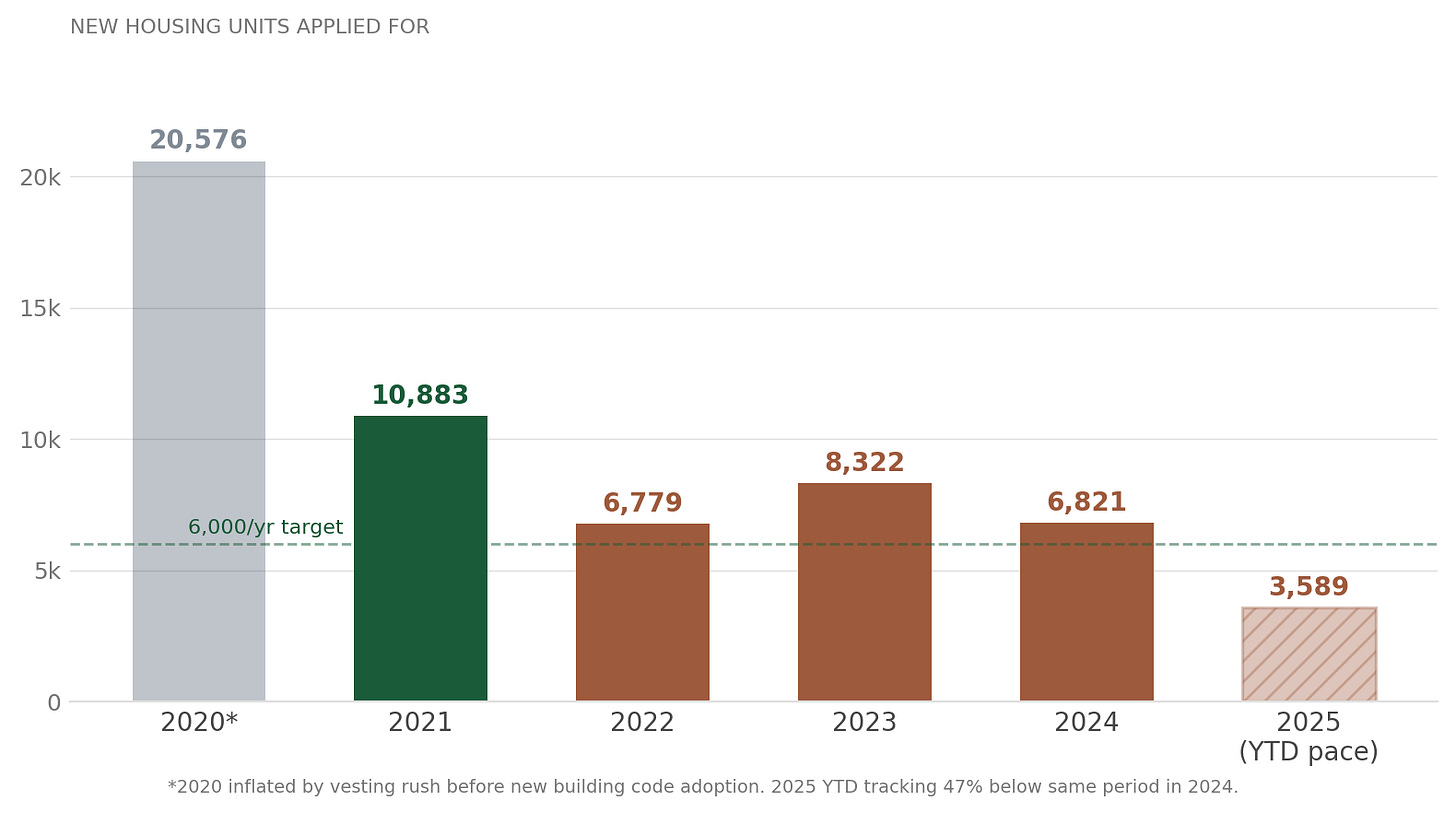
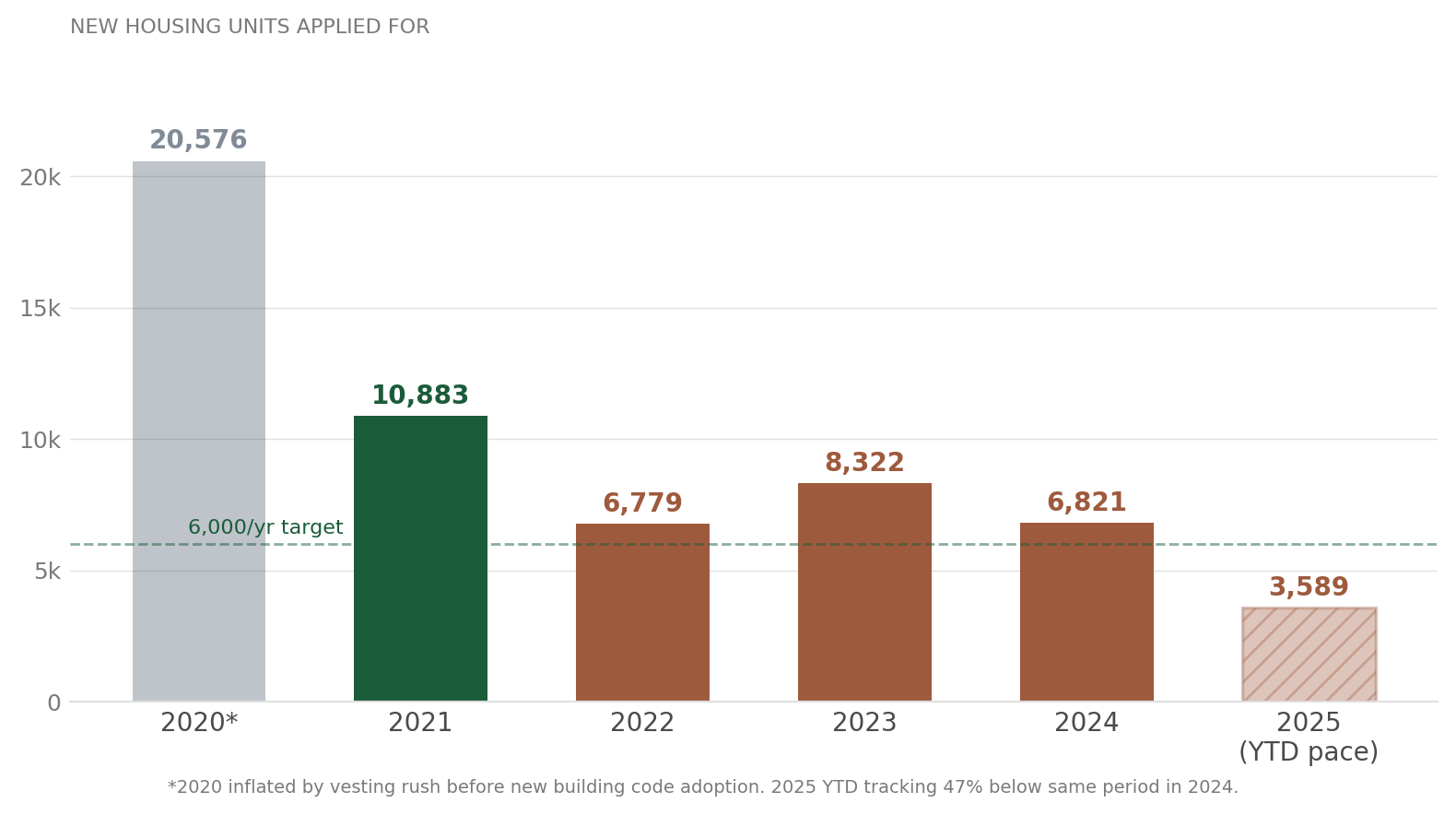
We’d be building enough homes to keep pace with growth. Seattle has managed that in recent years, but applications for new housing units have fallen by two-thirds since 2020, and the 2025 pace has dropped nearly 50% further. If the pipeline dries up, the homes we need two and three years from now won’t be there.
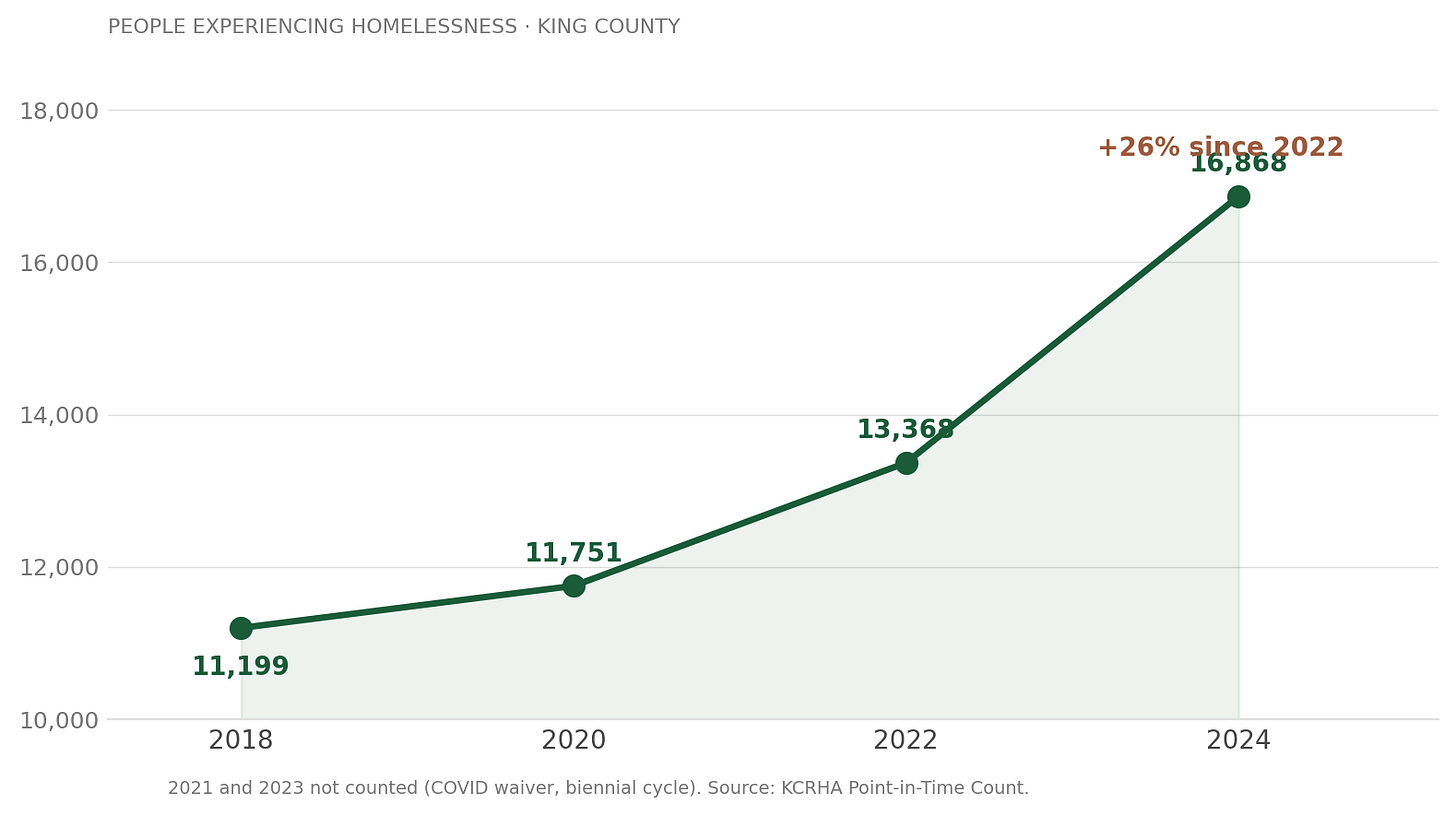
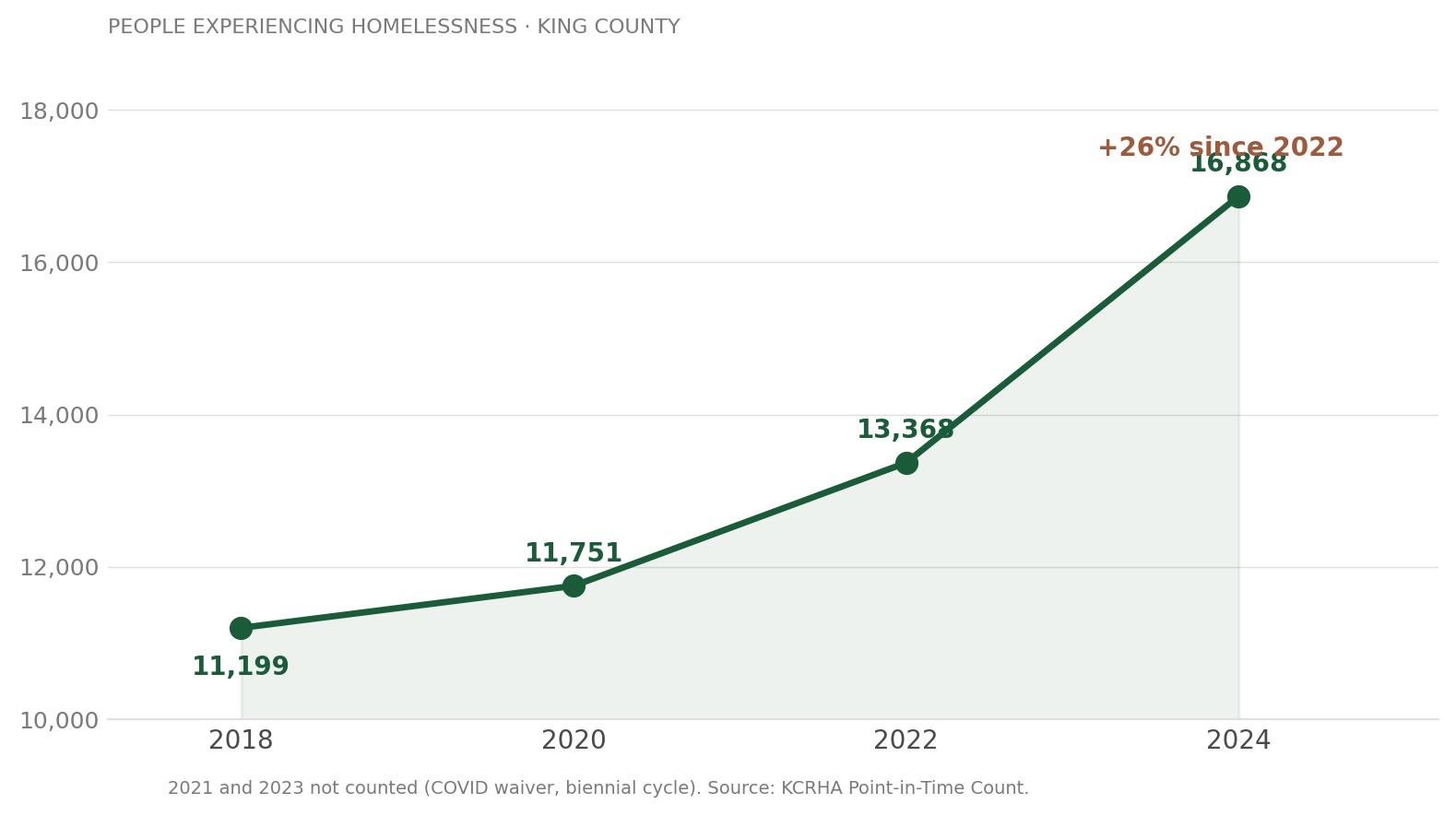
We’d see unsheltered homelessness declining year over year. Instead, more than 16,000 people are experiencing homelessness across King County on any given night, up roughly 26% since 2022.
We’d see cost burdens coming down so everyday life feels manageable. Instead, roughly 50% of renters are paying more than they can afford, electricity and gas bills are climbing year over year with further rate increases on the way, and the cost of just staying put keeps going up.
We’d be able to get where we need to go quickly and reliably. Instead, many transit riders spend significant time waiting and transferring, making trips slower and less predictable than driving.
Seattle has the ideas. It’s missing the follow-through.
This isn’t about a lack of resources, ideas, or intent. Seattle is home to strong organizations doing important work: groups fighting for smart growth, producing evidence-based policy research, building coalitions, and shaping public narrative. That work matters, and we need more of it.
What’s missing isn’t any one organization falling short. It’s that no one is stitching the full picture together: tracking outcomes across issues, staying engaged over years instead of legislative cycles, and organizing the sustained civic pressure that turns good policy into real results. Individual organizations do their part well. But the system as a whole doesn’t have a mechanism to ask whether all of this effort is adding up to changes people can feel, and to stay on it when things stall.
That’s also a matter of political will. Good policy alone isn’t enough when the systems responsible for implementation lack the pressure, support, and sustained attention to follow through. Organizing that political will is as important as getting the policy right.
That’s what led a growing community of Seattleites to co-found the For Seattle Project. Some of us have run city operations, built housing, or led civic organizations. Others are residents, in nonprofits, tech, the arts, small business, who got tired of watching good plans stall. What we share is the belief that residents who stay engaged and bring their experience to the work can hold this city to a higher standard.
A chance to be for something
For Seattle is a chance to be for something at a time when there’s so much to be against. For hope, progress, and real improvements people can feel. For Seattle being at our best: growing, and doing so affordably and sustainably.
For Seattle fills the gap between good policy and real results. We stay focused on a different question than most civic work asks: Is any of this actually changing what people experience? Not in theory. In practice. We track outcomes across issues and over years, not quarters or election cycles, and we organize the civic pressure to keep the city accountable for delivering.
We focus on:
More homes people can actually afford and access.
Real progress on homelessness: fewer neighbors living outside because more people are getting the shelter, treatment, and support they need.
Better ways to move around that save people time with less environmental impact.
Lower everyday costs, from utilities to childcare, so people aren’t constantly stretched just to get by.
Over time, that work points toward a broader goal: an economy that attracts and retains employers who create good jobs people can build a life around, and public institutions that deliver in ways people can count on.
We pick our priorities using three criteria:
They close a measurable gap in tangible ways: more homes people can move into, fewer people living unsheltered, lower everyday costs.
They operate at city scale: not pilot programs, but policies and systems that affect thousands of people.
They increase supply or access: building more homes, expanding shelter and treatment capacity, improving mobility, connecting more people to support that already exists.
If we can’t measure results within a few years or show it changes people’s lives, we don’t do it.
Housing first, because the pipeline is collapsing
Housing is the clearest place to begin. Seattle’s comprehensive plan calls for roughly 6,000 new homes per year, and the city has hit that pace in recent years. But applications for new housing units have collapsed, down two-thirds since their peak, and without action, today’s permit drought becomes tomorrow’s housing shortage.
Our approach has two parts: remove the structural bottlenecks that delay projects, and make progress visible so the city can’t quietly fall behind.
The campaign: a Housing Opportunity legislative package targeting three structural barriers to housing production: making it easier to convert underused commercial buildings into homes, removing code barriers that block mass timber, modular, and passive house construction, and expanding housing capacity in areas near jobs and transit. The goal is enough housing that’s affordable and accessible for both newcomers and the communities that have been here building these neighborhoods for a long time. It’s a targeted first step, not a comprehensive overhaul, and it’s designed to unlock housing that’s ready to be built now. There will be more to come as we develop a medium- and longer-term policy roadmap. But this is where we start, because these are changes the city can make today.
The commitment: we will publicly track whether the city is making real progress, and we’ll share what we find. Not spin. Not cherry-picked wins. An honest account of where things are moving and where they’re stuck. If we back a policy and it doesn’t deliver, we’ll say so and figure out why. That kind of transparency is how trust gets built, both with residents and with the leaders we’re asking to deliver.
This same approach applies to our other priorities: enrolling low-income households in utility savings programs that already exist, expanding shelter capacity with treatment and services, building more backyard cottages and apartment buildings, and investing in fast-to-build mobility like protected bike lanes and sidewalks.
We won’t pursue all of these at once. We’ll focus where we can make real progress in the near term.
Ideas alone don’t change cities. Organized pressure does.
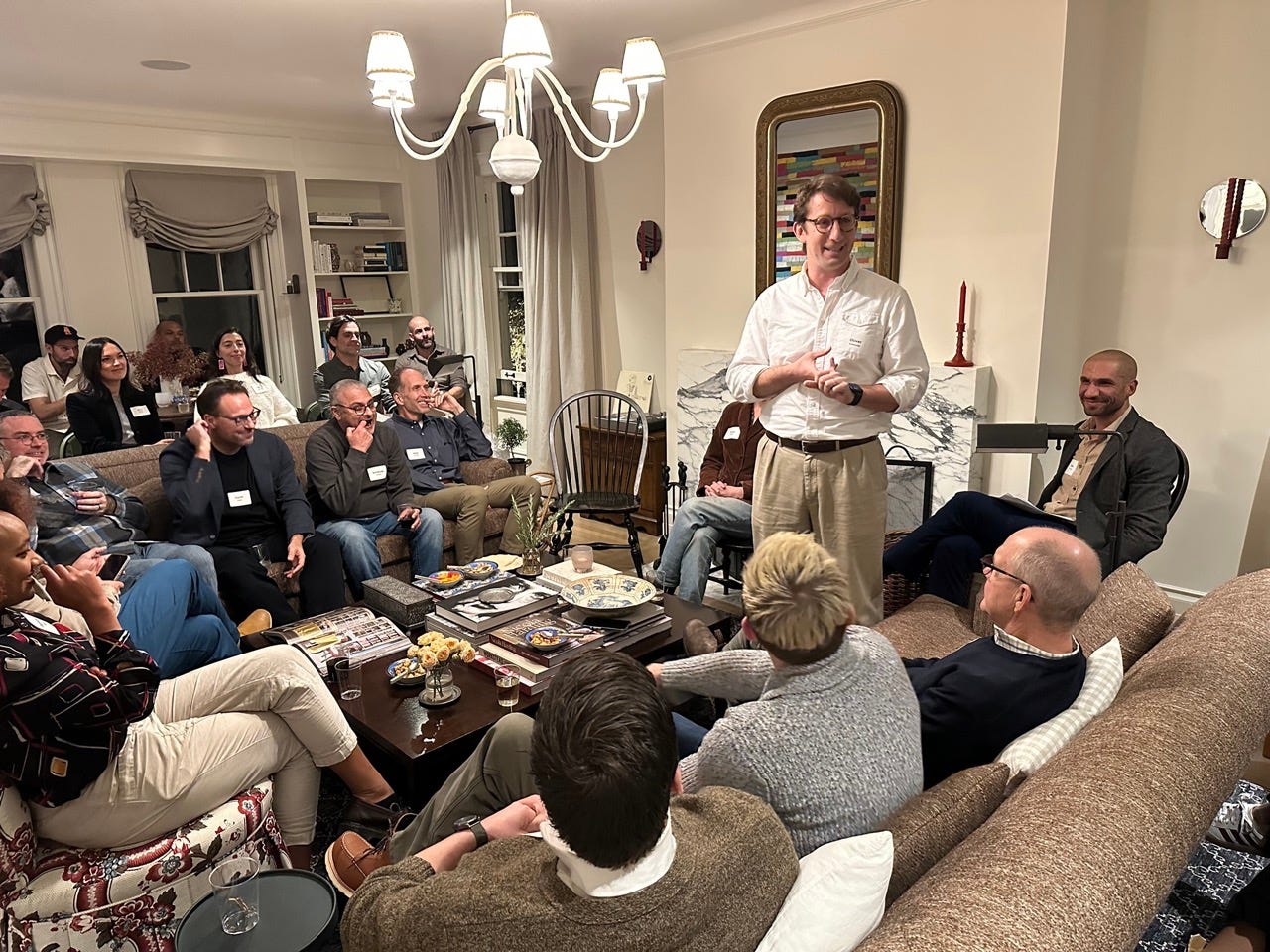
Organized people, organized ideas, and organized money create durable civic leverage. In practice, that means three things: we help unblock what’s stuck and bring researched ideas to the table. We show up at key decision points and track progress publicly. And when it matters, we engage in elections, supporting leaders who deliver measurable improvements and holding accountable those who don’t.
This is how incentives shift toward follow-through. When leaders know that progress will be tracked, that performance will matter over time, and that there is both pressure to deliver and support to get it done, the city starts producing results people can actually see.
Seattle has faced moments like this before. In the late 1960s, Forward Thrust brought residents together to fund parks, open space, and the early foundations of King County METRO. It reflected something real about this place: when our city reaches an inflection point, people organize, think big, and build.
For Seattle is built for a different challenge: not just rallying ambition, but sustaining the focus and pressure to make sure what gets started actually gets finished. We're part of the Abundance Network, a national coalition of civic organizations doing this same work in cities like San Francisco, Santa Monica, and Burlington, VT. We're not starting from scratch. New leadership at the city, county, and state levels creates space for that work. And many residents feel exhausted by national politics and are looking for ways to engage locally, where they can see the difference.
What we’ll deliver in Year 1
Here is what For Seattle will deliver:
Housing: Advance housing reforms, starting with the Housing Opportunity package, and begin publicly tracking whether the city is reversing the permit pipeline collapse and sustaining the housing production it needs.
Civic organization: Build a community of several hundred residents who show up consistently, track progress, and hold the city accountable.
Civics pipeline: Graduate 50 Seattleites through a civic leadership program, including communities most affected by the challenges we’re focused on, and connect them to opportunities where they can help drive progress.
We’ll measure impact and expand deliberately: if housing campaigns move the needle, we’ll add shelter and transit. If something isn’t working, we’ll say so and change course.
Join us
This only works if people commit to being part of it, not just once, but over time. For Seattle is a small team doing strategy and policy work, with a community of members who lead projects, contribute expertise, and connect the work to people and resources across the city. If you believe Seattle can build enough housing, make real progress on homelessness, and run a government that executes in ways people can actually feel, you are already part of this.
Become a founding member. Founding members are the people building this from the ground up: showing up, connecting us to people and ideas, and investing resources to make it sustainable. Every member's role looks a little different. Reach out and let's figure out yours.
Subscribe (below) to follow our progress. We’ll share what’s working, what’s not, and where we need help. As we grow and prove results, there will be more ways to get involved.
For Seattle is funded by its members and supporters, and we’ll be open about who invests in this work and why.
Seattle has everything it needs to be one of the best cities in the world. The question is whether we organize ourselves to make it work.
Come build with us.
I grew up here, first (and currently) in the Central District and later on the Eastside. My family worked in public service. I went through our public schools. I’m a product of public systems at their best, and I co-founded For Seattle because I believe our generation’s task is to make them work again. — Alex Lofton, Co-founder, For Seattle Project
Great to see your vision and leadership continue to evolve and make impact! Keep up the good work, my friend.
Very interested in your goals and ambitions. Can you explain your operations, how decisions are made, who your organizational allies are, and who is “we” in addition to the 2 co-founders? Thanks!