
Mayor Katie Wilson has put forward her first budget since taking office in January. (If you hear the word “city budget” and think “what the heck is that even?”, check out our prior post).
Many in the business community and some labor groups see it as a responsible, no-new-taxes budget. However, several councilmembers have raised concerns, questioning everything from police staffing to whether the deficit is really closing.
About 80% of the city’s budget is already accounted for before anyone even starts discussing it. Much of that large chunk of the budget is dedicated to city agencies such as Seattle City Light and Seattle Public Utilities. And some of that money is restricted to specific levies that voters already approved.
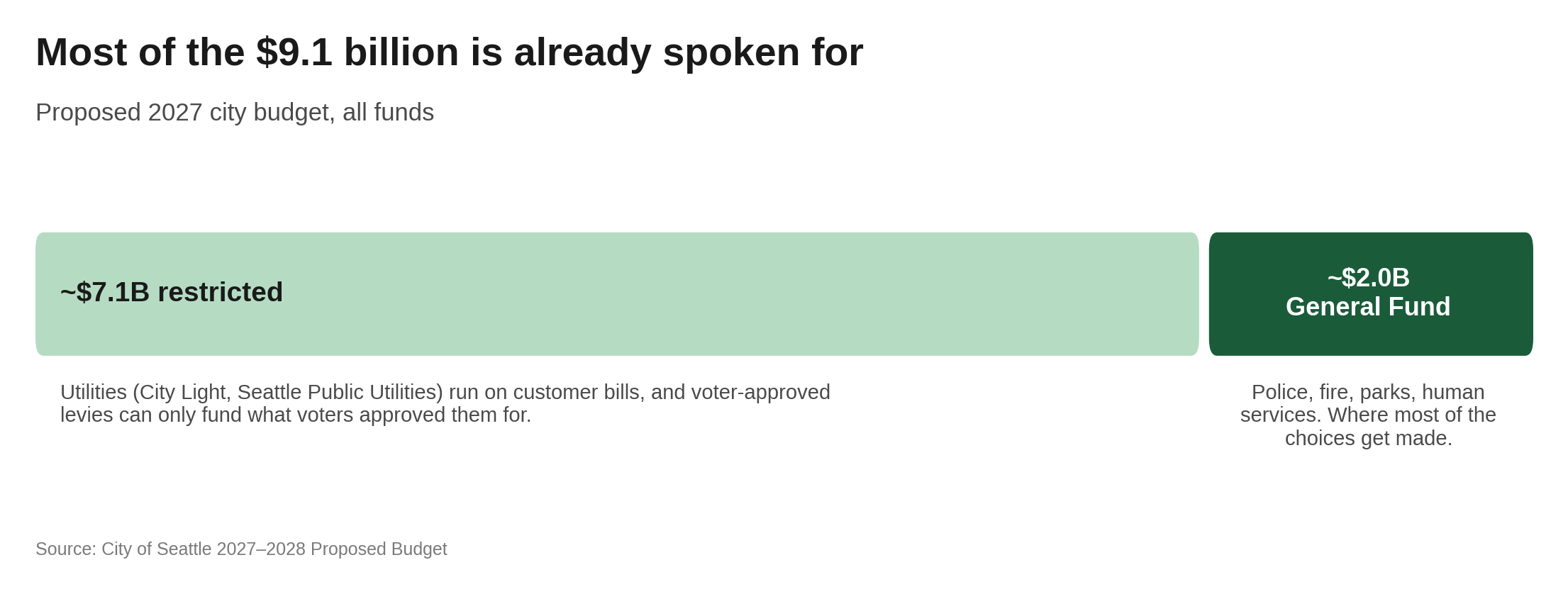
So the real back-and-forth every year is over what’s left: the city’s general fund. The general fund is the discretionary portion of the city budget. It’s just over $2 billion, and it’s the money that pays for most of what people actually think of as the city, like police officers, firefighters, and city parks.
Here’s where that roughly $2 billion is going this year:
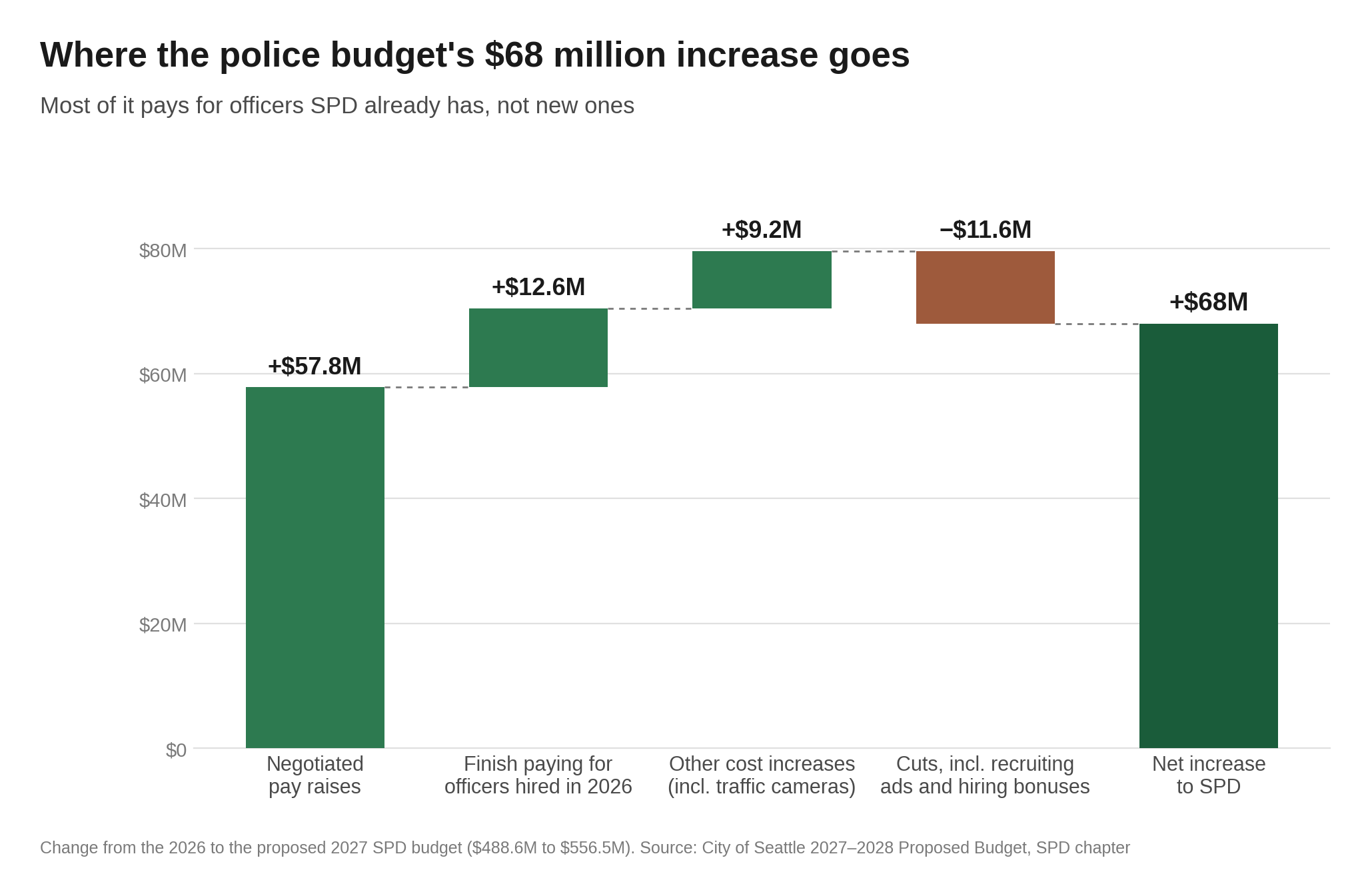
Police: Spending on SPD is up $68 million from the previous year. Of that increase, about $58 million is going to negotiated pay raises, and $12.6 million to finish paying for officers who were hired earlier this year. The proposal also calls for cuts to SPD’s budget for recruitment, marketing and officer bonuses.
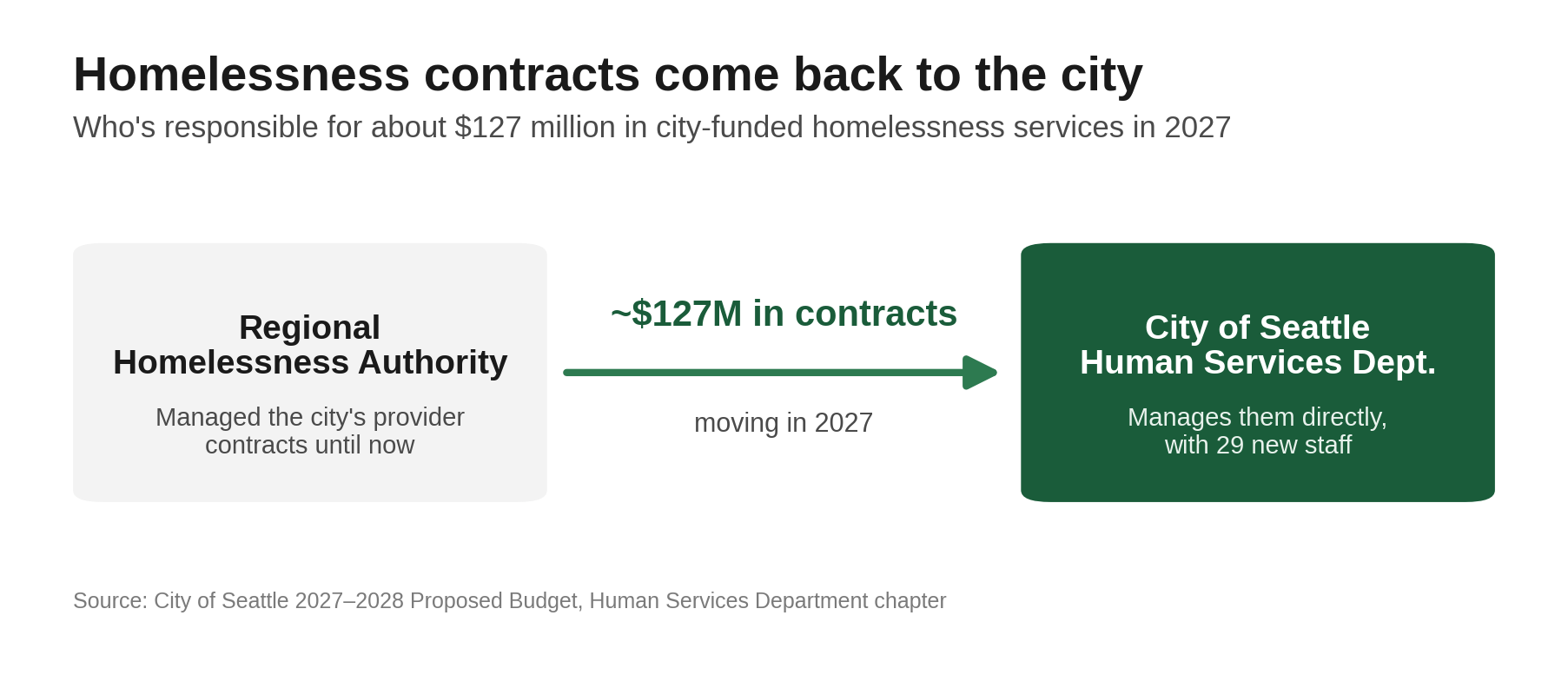
Homeless services and housing: Mayor Wilson committed $185.5 million to homelessness services within the Human Services Department, an increase of 7.6%. That includes $37 million to open about 1,000 new shelter beds by the end of 2027. About $127 million in homelessness contracts are being taken back from the regional homelessness authority and going back directly to the city, along with 29 new staff members to manage them.
Public safety beyond police: Over $100 million has been committed to non-police-related public safety efforts. CARE is losing 22 unfilled positions: 14 crisis responders and 8 911 call takers. The fire department’s overtime budget would be cut by $7.1 million, or about 17%, potentially leaving four to six fire units out of service on any given day.
Food programs: $57 million is earmarked for food programs, including making the Fresh Bucks grocery benefit expansion permanent for roughly 20,000 households and $4.1 million in one-time funding for universal school meals.
Arts education: An increase of about $557,000 for the Creative Advantage program, bringing it to $1.2 million a year to expand equitable access to arts programming for Seattle Public Schools students.
Three pieces of this budget deserve a closer look, because each one reveals something the headline number hides: the police budget (funded isn’t the same as filled), homelessness spending (who’s actually accountable for it now), and JumpStart, the tax that was supposed to fund housing and green jobs, and is increasingly paying for general city operations instead.
Next up: We’ll examine the police budget and see why a bigger budget doesn’t necessarily mean more cops on the street.
And as we mentioned in our previous post, if you want to weigh in on what you want to see in this budget, email your councilmember directly (and if you don’t know your councilmember, find their email here), or speak at the next public hearing on Thursday, November 5th.